Most people first notice pearl pigment on a car. The paint seems to brighten, soften or change colour as the car moves. Mica is one of the materials behind that effect.
We get the same questions from buyers again and again. Is mica natural? Is synthetic mica better? Is it magnetic? What does TiO₂ do? Here are the straightforward answers.
First, what does mica do?
Mica is a family of layered minerals. It naturally splits into thin, flat flakes. That shape makes it useful for pearl pigments.
Imagine each flake as a tiny transparent tile. When thousands of these tiles lie flat in paint, they catch light across the surface. Mica gives the pigment its shape. The coating on the mica creates most of the colour and shine.
platelet
coating
interference colour
Pearl pigment is a layered material. It is not simply white TiO₂ powder mixed with mica.
Is mica natural or synthetic?
Both exist. Natural mica is mined, cleaned and sorted by particle size. Synthetic mica, usually synthetic fluorphlogopite, is made from controlled raw materials at high temperature.
Natural mica works well in a broad range of paints, plastics and cosmetics. Synthetic mica is often chosen for a cleaner white appearance, high transparency and tighter control over impurities.
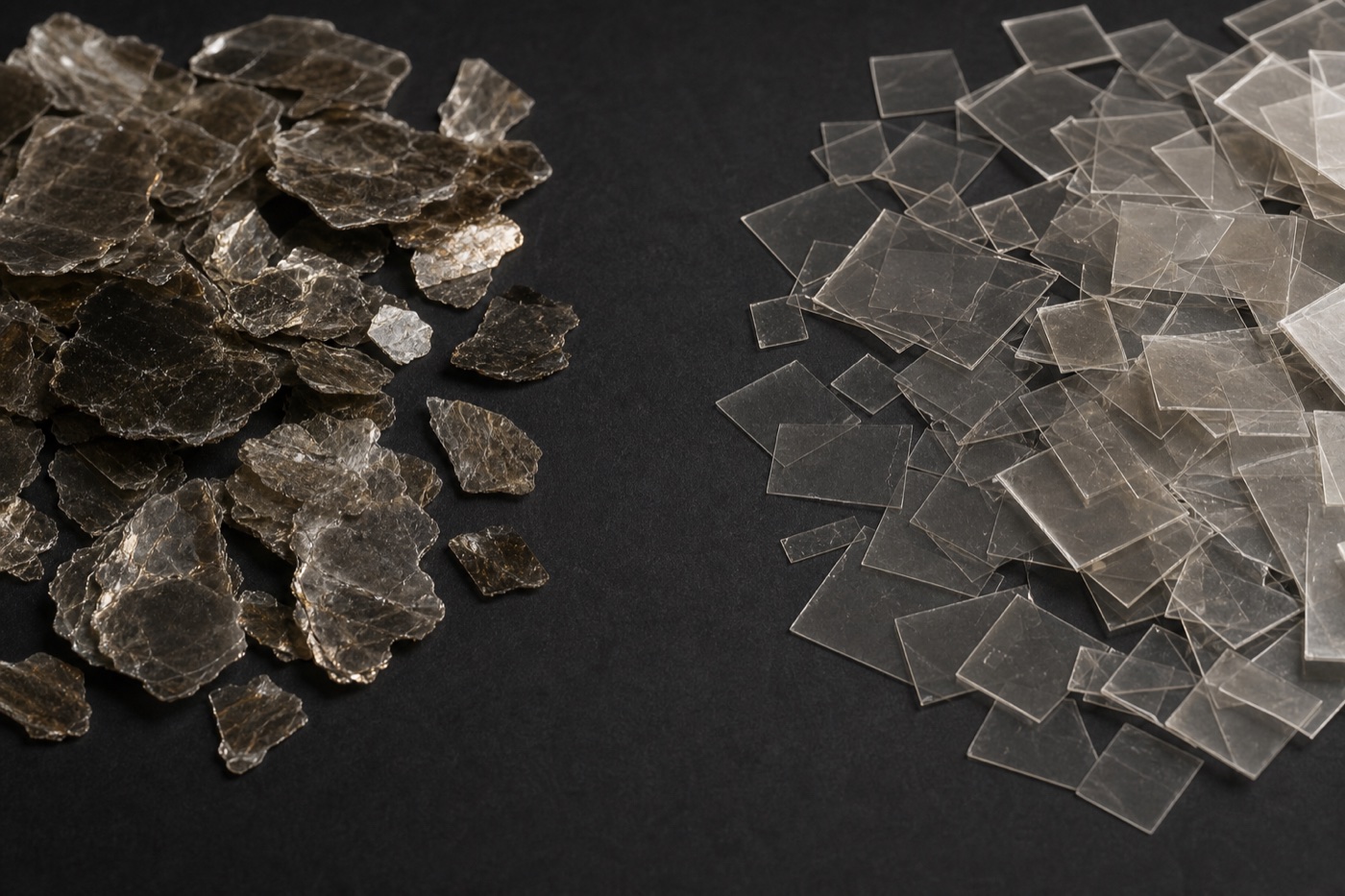
| Decision point | Natural mica | Synthetic mica |
|---|---|---|
| Origin | Mined mineral, commonly muscovite or phlogopite | Manufactured crystalline fluorphlogopite |
| Visual character | Good pearl lustre; natural variation can add warmth | Often cleaner, brighter and more transparent |
| Consistency | Strong consistency is possible with good sorting and process control | Composition and impurity levels can be tightly controlled |
| Sourcing question | Mine traceability, labour practices and processor due diligence matter | Energy use and manufacturing footprint matter |
| Best fit | Broad industrial use and cost-effective effect systems | High-purity, bright or demanding premium effects |
Is synthetic mica eco-friendly?
Not automatically. Synthetic mica offers good traceability, but manufacturing it takes a lot of heat and energy. Natural mica avoids that production step, but responsible mining and labour practices must be checked.
Is mica magnetic?
Standard natural and synthetic mica are not meaningfully magnetic. A normal mica-based pearl pigment will not move into patterns under a magnet.
Magnetic pearl pigments are specially engineered with a responsive component. A magnetic field can move or orient those particles before the coating cures. This creates waves, depth and cat-eye effects. The magnetic response comes from the added component, not the mica.
What are the benefits of TiO₂ pigment?
Titanium dioxide reflects light strongly. In ordinary white pigment, it gives brightness and hiding power. In pearl pigment, it is applied as a thin layer on mica.
The thickness of that layer controls the effect. A thin coating creates silver-white pearl. As the coating gets thicker, the reflected colour can move through gold, red, blue and green.
A TiO₂-coated pearl pigment is not a substitute for normal white TiO₂. Its shape, dosage and purpose are different.
What is pearl effect paint for cars?
Pearl car paint contains thin effect pigments that look brighter or change colour when the viewing angle changes. The finish can be subtle, like a soft white glow, or dramatic, like blue shifting to gold around a curved panel.
Metallic paint usually uses aluminium flakes for a sharp metallic sparkle. Pearl paint uses coated mica or similar platelets for a softer glow and more depth.
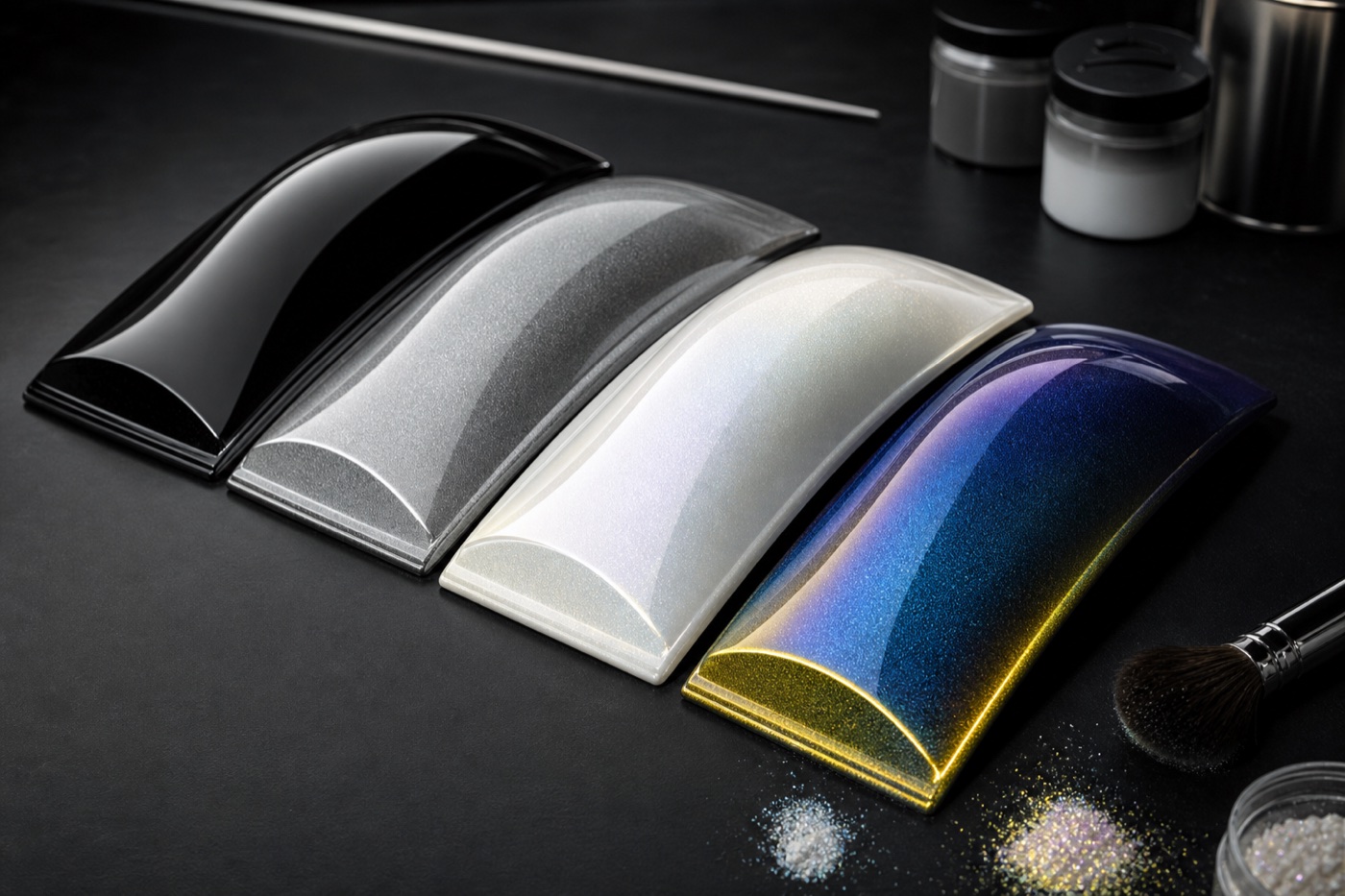
| Finish | Main visual mechanism | Typical impression |
|---|---|---|
| Solid | Absorption and scattering from conventional pigments | Consistent colour with little angle change |
| Metallic | Directional reflection from aluminium flakes | Crisp sparkle and metallic flash |
| Pearl | Reflection, transmission and interference in coated platelets | Soft lustre, depth and possible colour travel |
Why spraying matters
The flakes need to lie evenly. Spray pressure, viscosity, film thickness and flash time all affect the result. Poor orientation can make the finish look cloudy or patchy.
This also makes pearl paint harder to repair. A panel may match from the front but look different from the side. Professionals check the colour from several angles.
So, which is better?
There is no single winner. The better pigment is the one that produces the right finish and works in your formulation.
For automotive coatings, begin with a target panel. For cosmetics, check purity and permitted use. For plastics, test processing temperature and shear. Always compare samples in the final formulation.
Quick answers
Are micas natural?
Many are. Muscovite and phlogopite are naturally occurring mica minerals. Synthetic fluorphlogopite is a manufactured mica used when controlled purity and brightness are important.
Is mica magnetic?
Standard mica is not meaningfully magnetic. Magnetic effect pigments include an added, responsive component that can be oriented under a magnetic field.
What does TiO₂ do in pearl pigment?
Its high refractive index and controlled coating thickness make strong reflection and optical interference possible, producing brightness, lustre and interference colour.
Is pearl car paint just metallic paint?
No. Metallic paint primarily uses reflective metal flakes, while pearl paint uses layered effect pigments to create depth and interference. Some commercial finishes combine both.
Can one pearl pigment work in every application?
No. Surface treatment, particle size, purity, weathering, heat stability and binder compatibility must suit the end use.
Further reading
Technical background: U.S. Geological Survey: Mica; ECHA: Fluorphlogopite; Responsible Minerals Initiative: Mica sourcing. Accessed 28 July 2026.
Show us the finish you want
Tell EMS your base colour, binder and process. We can suggest a pearl pigment grade for sample testing.
Discuss your formulation